Driver safety training
Driver safety training is not a racing course. It shows you how your vehicle behaves at the limit of grip and how to react correctly when it does.

What is driver safety training?
A driver safety training course is a guided practice day on a closed site. You drive your own vehicle. An instructor explains each exercise, demonstrates it if needed and gives you feedback afterwards.
The goal is control, not speed. In a safe setting, you experience what happens rarely and usually by surprise on the road: an emergency stop, an evasive manoeuvre, a vehicle that starts to slide. If you have experienced these situations consciously once, you react more calmly and more correctly in an emergency.

The training courses follow the standard of the German Road Safety Council (Deutscher Verkehrssicherheitsrat, DVR). It defines content, procedure and the qualification of instructors.
There are training courses for cars and for motorcycles. Both are built in levels. Each level should build on the one before.
Car training
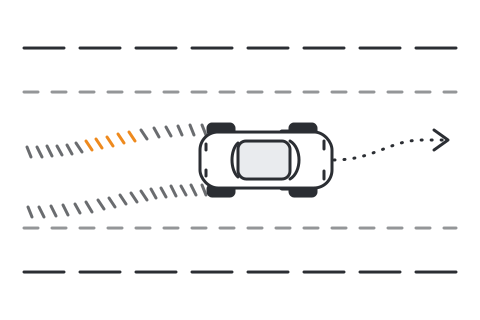
Car training has three levels. Basic lays the foundations. Advanced deepens them with higher demands. Dynamics is for drivers who want to handle their vehicle deliberately at the limit of grip.
-
Basic
New compared with the previous level: entry level. You get to know the basics of driving physics in practice.
Content
- Seating position and steering technique
- Braking and evasive manoeuvres on different road surfaces
- Handling: self-steering behaviour and load changes
- How the ABS and ESP assistance systems work
Who it is for
Anyone with a driving licence, whatever their driving experience and vehicle. Novice drivers in accompanied driving from 17 (BF17) can also take part, depending on the organiser.
Requirements
A valid driving licence and a registered, roadworthy vehicle.
Benefit
You know how long your braking distance really is and how to steer during an emergency stop. Your vehicle feels more familiar afterwards.
-
Advanced
New compared with the previous level: familiar exercises with higher demands, new combinations, assistance systems in detail.
Content
- Familiar exercises with higher demands
- New exercises that combine several techniques
- Controlling self-steering behaviour and load changes deliberately
- How modern assistance systems work, in detail
- Recognising hazards earlier
Who it is for
For everyone who knows the Basic level and wants to consolidate their reaction patterns.
Requirements
Basic training or comparable experience. Your own roadworthy vehicle.
Benefit
You experience that on the skid pad just a few km/h more are enough to make a vehicle unstable. This awareness changes the way you drive every day.
-
Dynamics
New compared with the previous level: vehicle dynamics exercises in which the vehicle is deliberately taken to and beyond the limit of grip.
Content
- Triggering and catching oversteer and understeer on purpose
- Control when grip decreases
- Steering and throttle control at the limit of grip
Who it is for
For experienced drivers who want to get to know their vehicle at the limit of grip under guidance.
Requirements
Vehicle with rear-wheel or all-wheel drive. Advanced training recommended.
Benefit
You understand why a vehicle breaks away, and you have experienced how to stabilise it again.

Skid pad from above: this is where you practise oversteer and understeer as grip fades.
Typical schedule of a training day (example, may differ between organisers):
- 09:00–10:00 Welcome and briefing
- 10:00–12:30 Braking and evasive manoeuvres
- 12:30–13:30 Lunch break
- 13:30–16:00 Handling and dynamics
- 16:00–16:30 Wrap-up and questions
Motorcycle training
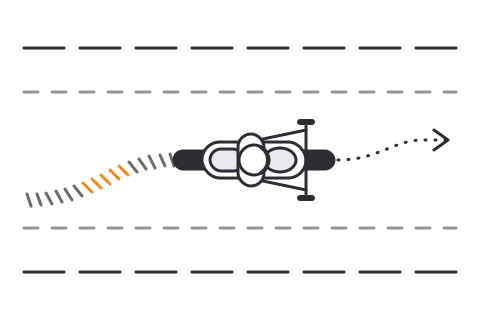
Motorcyclists are at greater risk than car occupants. Motorcycle training therefore puts particular emphasis on where you look, seating position and clean basic technique. It has two levels.
-
Basic
New compared with the previous level: entry level. You practise the basic techniques of riding a motorcycle under guidance.
Content
- Different braking techniques
- Steering and evasion variants
- Stabilising and riding slowly
- Cornering technique and where to look
- Seating position on the motorcycle
Who it is for
For anyone with a motorcycle licence, from those getting back on a bike to riders with many years of experience.
Requirements
A valid licence and a registered, roadworthy motorcycle. Full protective clothing is mandatory during training: helmet, jacket and trousers or a one-piece suit, gloves, boots.
Benefit
You brake more safely, swerve with more control and handle your motorcycle safely even at walking pace.
-
Advanced
New compared with the previous level: higher speed and combined manoeuvres, such as braking followed by swerving.
Content
- Emergency braking from higher speed
- Swerving after braking
- Cornering line and lean angle within safe limits
- Riding with a pillion passenger (optional)
Who it is for
For riders who want to refine their technique and practise with higher demands.
Requirements
Basic training or comparable experience. Full protective clothing.
Benefit
You stay in control even in surprising situations and choose your line deliberately.
Car or motorcycle: what is different?
The basics are similar, but the emphasis differs considerably.
| Topic | Car | Motorcycle |
|---|---|---|
| Where you look | important for swerving and braking | decisive, your gaze steers the motorcycle |
| Seating position | upright, close enough to the steering wheel | knees against the tank, relaxed arms |
| Risk | protected by the body of the car and the seat belt | much higher, no protection from a car body |
| Protective clothing | not needed | mandatory during training: helmet, jacket, trousers, gloves, boots |
| Stability at low speed | not an issue | dedicated exercises for riding slowly |
| Braking | emergency stop, ABS handles the modulation | front and rear wheel modulated, with or without ABS |
Levels at a glance
The table shows all five levels side by side. On a smartphone, you can scroll it sideways.
| Aspect | Car Basic | Car Advanced | Car Dynamics | Motorcycle Basic | Motorcycle Advanced |
|---|---|---|---|---|---|
| Goal | experience the basics | consolidate reaction patterns | get to know the limit of grip | secure basic technique | refine technique |
| Demands | entry level | medium | high | entry level | medium to high |
| Typical exercises | braking, swerving, handling | combined exercises, more speed | oversteer and understeer | braking, swerving, riding slowly | emergency braking, cornering line |
| Requirement | driving licence | Basic or experience | rear-wheel or all-wheel drive | licence, protective clothing | Basic or experience |
| Target group | everyone | advanced drivers | experienced drivers | everyone | advanced riders |
How to book a training course?
SIHTRA is an instructor, not an organiser. I run training courses on behalf of organisers. Registration, dates and terms of participation are handled by the organiser in each case.
Through the Verkehrswacht: Many training courses are offered by the Deutsche Verkehrswacht (German Road Safety Association) and its regional road safety associations (Kreisverkehrswachten). There you will find dates in your region: Deutsche Verkehrswacht (external link).
As a company, club or group: Are you planning a road safety day or a safety event? Would you like to hold it at a driver training centre? I can support you as an instructor. Individual training sessions for teams, clubs or families are also possible. Together we agree on focus areas, vehicle classes or assistance systems beforehand.

If you have questions about content or levels: write to me and tell me what it is about.
From practice


Again and again I see participants who feel unsure in traffic. Driver safety training can build confidence: you “experience” patterns of action for dangerous driving situations under guidance.
My assessment: many people underestimate distraction in traffic. Whether it is the smartphone, an interesting conversation with the passenger or the car's touchscreen, suddenly the gap to the vehicle ahead is far too small and there is no practised pattern for braking and swerving.
Questions? Let's talk.
Tell me what it's about. You'll get an honest assessment, not a sales pitch.