What to protect
What should be protected? People, living space, valuables, data.
Safety in everyday life starts with a clear look at your situation. Here you will find the basics for a concept of your own, practical checklists and notes on classic consulting topics.
A security concept sounds like something for companies. For private individuals it is simpler: a considered answer to the question of what you want to protect, against what, and with how much effort. It does not have to be long. It has to fit your life.
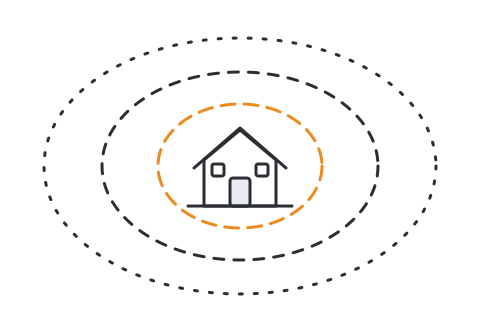
Clarify what to protect: What matters to you? Usually it is people, the flat or house, documents, keepsakes and personal data.
Assess risks: A risk results from likelihood and impact. A frequent event with a small impact can matter more than a rare one with a large impact. A simple scale of low, medium and high is enough to start with.
Choose measures: There are three kinds of measures. Organisational measures are rules and habits. Structural measures concern doors, windows and lighting. Technical measures are things like an alarm system, a camera or smart home functions.
Review regularly: Circumstances change. A move, a new baby, a new job with travel or a relative who needs care changes the situation. Look at your concept once a year and adjust it.
Stay proportionate: The effort should match the risk. A measure that gets in the way of everyday life will soon stop being used.
An example: a family lives on the ground floor, the patio door faces the garden and cannot be seen from the street. The risk of a break-in is higher there than at the front door. A lockable window handle and a motion detector are more effective than a camera on the street side. And the rule never to leave the door tilted open when going out costs nothing.
What should be protected? People, living space, valuables, data.
What can happen, how likely is it and what would the consequences be?
Organisational, structural, technical. Check them in this order.
Once a year or after changes: does the concept still fit?

The following lists are starting points. Adapt them to your situation. They only work once everyone in the household knows them. Go through the points together, with children too, in a way that suits their age.
Digital technology can increase safety. But it also brings new risks that many people overlook. What matters is to use the technology consciously and to know what happens if it fails.
Opportunities:
Risks:
What you can do:
Alongside digital questions, the classic topics remain important: cameras, intruder alarm systems and simple everyday precautions.
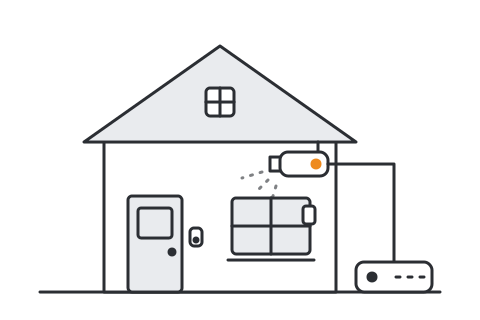
A camera is not an end in itself. First clarify what it is for: securing evidence, deterring, or checking who rang the bell. The location follows from that. Entrances, the patio door and the driveway make sense, at a height that shows faces and keeps the camera hard to reach.
The legal position in brief:
A system that records locally is a good choice, for example UniFi Protect from Ubiquiti. The recordings stay in the house on the gateway or a recorder (NVR), and no cloud subscription is needed. Remote access while you are away is possible but optional. Depending on the model, cameras of the G5 and G6 generations detect people and vehicles directly on the device. The limits: the system ties you to one manufacturer, and convenient remote access runs through a Ubiquiti account. More on the gateway and network under Ubiquiti: planning and installation.
An intruder alarm system has a clearly defined job: it notices when someone enters the house without authorisation and passes that information on, to a siren, to your smartphone or to a monitoring service. Its real value lies in the time it gains. The sooner someone knows, the sooner they can act. It will not stop a determined burglar. It deters, and it makes sure a break-in does not go unnoticed.
The market is divided into two classes. The first consists of systems built to the guidelines of VdS Schadenverhütung, the German insurers' standards body, graded in classes A to C. They are planned, installed and maintained by certified installers. Insurers require them when there are high values in the house, such as jewellery, art or collections. The second class is smart home systems. They cost considerably less and are quick to fit, but they do not meet such requirements.
The typical private household has no insurance requirement of this kind. Here I consider a setup based on UniFi a sensible choice. The argument is not the individual detector but the platform: network, Wi-Fi, cameras, doorbell, sensors and, if needed, access control run in one shared interface. The data stays in your home, there are no subscription fees, and you can start with a few devices and add more later. Comparable components such as door and window contacts, motion detectors or sirens are also available in other smart home ecosystems. There, though, they are usually spread across several apps, radio standards and cloud services. With UniFi, one system covers the whole chain, from the home network to the siren.
For physical security, Ubiquiti now offers its own range (as of 2026): contacts for doors and windows, motion detectors, sensors that recognise breaking glass and alarm sounds, and water sensors. An alarm manager evaluates the events according to a schedule and triggers notifications, a PoE siren or recordings. Existing wired detectors can be integrated via a hub kit. You should know the limits: this is not a VdS-certified intruder alarm system. There is no classic keypad, and a monitoring service can only be connected indirectly. Where an insurer requires certification, this solution is therefore not suitable.
I do not plan or install VdS systems myself. If a certified system is needed, I will tell you so plainly and recommend a certified installer. In all other cases, I plan the setup together with you.
Most burglars want to get in quickly and unnoticed. Every minute that a door or window holds out lowers the chance that an attempt succeeds. That is why mechanical comes before electronic. Windows and doors of resistance class RC2 offer good basic protection. Existing components can often be retrofitted with additional locks, lockable handles or crossbars. Secure light wells with a grating lock.
Motion detectors at entrances and in dark corners take away cover. Timers or smart home scenes make the house look occupied. Attentive neighbours are an effective protection that costs nothing.
Keep track of your keys: who has which one, and what happens if one is lost? Keep copies of important documents separate from the originals. For valuables, a safe with a tested resistance grade under EN 1143-1 is suitable. Which grade you need depends on the values and is stated in the terms of your household contents insurance. An emergency plan sets out who does what, where to meet and which numbers apply: 110, 112 and the card blocking hotline 116 116.
The police crime prevention advice centres give free, manufacturer-neutral advice.
Precautions in one hour:

I often find that the first thing people talk about is cameras and alarm systems. The tilted patio door and the key in the flower pot only stand out at second glance.
My assessment: simple habits often achieve more than additional devices. Technology complements them, but does not replace them.
Tell me what it's about. You'll get an honest assessment, not a sales pitch.